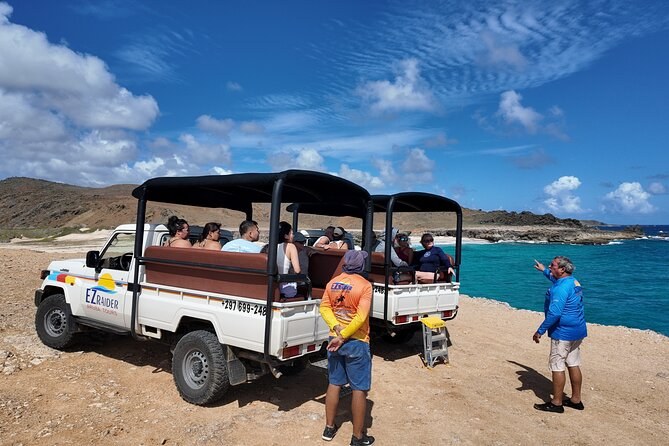
What an Arikok National Park Tour Costs in 2026
Short answer. Four different numbers make up the cost of a day here: the seat or vehicle fare (US$78 to US$600), the US$22 conservation pass, whatever the operator collects at check-in, and the things you buy at the desk. Six listings fold the pass into the fare. Budget for cash either way.
The price on a booking page is not what a day at Arikok National Park costs, and the gap is not large but it is the source of nearly every complaint in the reviews. Here is every number, where it comes from and who has already paid it.
What are the four numbers?
One: the fare. Seventy-eight dollars for the cheapest seat, six hundred for a private vehicle. This is the figure on the booking page.
Two: the conservation pass. US$22 per adult, set by the Aruba Conservation Foundation and not by any operator. Under-17s free.
Three: whatever is collected at check-in. On some listings that is the pass; on one it is also a compulsory insurance fee per booking.
Four: what you buy at the desk. Goggles and dust masks on two of the open-jeep operators, at fifteen and five dollars.
How much is the conservation pass?
US$22 per person for adults, published by the Aruba Conservation Foundation, which manages the park. Children under 17 enter free with no ticket at all. Residents of Aruba, Bonaire and Curaçao pay a reduced rate on production of a government ID.
Two operators quote different figures in their own exclusion lines — one says US$20, another US$25 — because that is what each of them collects at check-in rather than what the gate charges. Those are their numbers. The park's own price is the one that belongs on a page like this, and the fees page keeps them apart.
Which fares include the pass?
Read from each listing's own inclusions and exclusions. The fare column is the booking-page price, not the total.
| Tour | Fare | Conservation pass | What that makes the day |
|---|---|---|---|
| National Park Arikok Jeep Safari Adventures | From $85 per person | 2 to 6 hours | Included — $85 is the whole cost |
| Aruba Arikok National Park Jeep Safari: Natural Pool & Baby Beach | From $95 per person | 5 hours | Included |
| Aruba: Arikok National Park Jeep Safari | From $109 per person | 4 hours | Included |
| Half Day Hike at Arikok National Park & Snorkel | From $115 per person | 4 to 5 hours | Included |
| UTV and Jeep Island Adventure Mix Up | From $290 per person | 4 hours | Included |
| Private Jeep Tour National Park | From $299 per person | 6 hours | Included |
| Aruba Signature Jeep Tour: Natural Pool and Baby Beach | From $78 per person | 4 hours 30 minutes | Collected at check-in |
| Aruba Natural Pool and Indian Cave Rugged Jeep Safari | From $99 per person | 4 hours 30 minutes | Collected at check-in |
| Aruba UTV Adventure to Natural Pool Jeep Transfer | From $349 per group | 6 hours | Collected at check-in, plus an insurance fee |
Is the cheapest fare the cheapest day?
Not always, and this is the useful arithmetic on the page. Seventy-eight dollars plus a conservation pass lands within a few dollars of eighty-five dollars with nothing further to pay. What separates them then is not money at all — it is that one collects you from your hotel lobby and the other reaches six named stops inside the park.
Choose on what the day contains and treat the price as a tie-breaker. That is the opposite of how most people book, and it is why the reviews that complain about money are almost never complaining about the amount.
What does a private jeep actually cost?
Two of the three private listings are priced per vehicle rather than per seat: six hundred dollars for up to four travellers on one and up to five on the other. The third is priced per person, which is a different product wearing a similar name.
The arithmetic flips somewhere around four people. Two adults on a private vehicle are paying three hundred each; four are paying a hundred and fifty, and five are paying a hundred and twenty, which is within reach of a shared seat with the whole jeep to yourselves. The private tour page works it through with the inclusions attached.
What does it cost to skip the tour entirely?
A conservation pass and some petrol. For a couple that is forty-four dollars plus fuel, and for a family of two adults and three children it is still forty-four dollars, because the children go free. That buys both caves, Boca Prins, Dos Playa, Jamanota and every walking trail, on graded road in an ordinary hire car.
What it does not buy is Conchi, and it carries a risk the tour does not: your rental insurance almost certainly excludes the unpaved track, and the excess is several times a guided seat. The self-drive guide covers what to check at the hire desk.
What is worth paying more for?
- Time at Conchi. The spread runs from twenty minutes to a full hour and it is the single biggest difference between two similar-looking fares.
- The pass being included. Not for the money, for the absence of a queue and a cash search at the desk.
- Hotel pickup, if you are on the strip and would otherwise need a taxi to Oranjestad each way.
- A small cap. Twelve travellers and eighty travellers are different days at the same stops.
- Lunch, on the two listings that carry it, if you would otherwise be carrying a picnic in a dusty jeep.
What is not worth paying more for?
Duration on its own. An eight-hour listing is not twice the park of a four-hour one — it is usually the same park plus the lighthouse, the natural bridge and the rock formations, all of which sit outside the boundary and none of which needs a 4x4. If you want the island, that is a fine purchase. If you want the park, you are paying for driving.
What does a family of four pay?
Less than almost anywhere else on the island, because of one rule: under-17s enter the park free. Two adults and two children driving themselves pay two conservation passes and a tank of petrol. The same family on a shared jeep pays four fares, because operators price their own seats and most charge a full fare for a child.
That is where a private vehicle stops looking extravagant. Six hundred dollars for up to four or five travellers is a hundred and fifty a head at four and a hundred and twenty at five, which is inside the range of a shared seat and buys the jeep to yourselves. Below four people it does not work at all.
Does booking direct save anything?
Sometimes, and it is a fair question to ask. Resale platforms carry their own margin, so an operator's own rate can be lower — one traveller compared the two and said so in a review. What the platform buys you is the cancellation terms, the payment protection and a booking that exists in writing before you land.
Our prices are the platform prices, because those are the ones with a published cancellation policy behind them. If you would rather deal with the operator directly, the figures here still tell you what the day should cost.
How much cash should you carry?
Enough for the pass per adult if your fare excludes it, plus something for a drink at the visitor centre and the goggles if you are on an open jeep in the windy months. Nothing inside the park beyond the visitor centre sells anything, and there is no cash machine between the gate and the coast, so bring more than you expect to spend.
The one thing to check before you pay. Read the exclusions on your booking page, not the inclusions. Every complaint about money in these reviews is about something that was listed as excluded and not read. The FAQs cover what gets collected where.
What would we spend it on?
Eighty-five dollars on the six-stop circuit with the pass inside it, if the park is the point. Seventy-eight plus the pass on the hotel-pickup jeep, if the strip and a swim at the end are the point. And forty-four dollars on a hire car and two passes for a second morning, because that is where the walking is. Arikok National Park ticket prices lists every fare with the pass column beside it.
Frequently asked questions
How much does it cost to visit Arikok National Park?
US$22 per adult for the conservation pass, free for under-17s, if you are driving yourself. A guided seat starts at seventy-eight dollars and several fares have the pass built in. A private vehicle runs to six hundred for up to four or five travellers.
Is the park fee included in the tour price?
On six of the listings here, yes. Three state it in their own exclusions and collect it when you check in, which is where nearly every money complaint in the reviews comes from. The fees page lists which is which.
Do children pay to enter the park?
No. Under-17s enter free with no ticket. Tour operators price their own seats and most charge a full fare for a child, so the saving is on admission rather than on the tour.
Is a private tour cheaper for a group?
Above about four travellers, often yes, because two of the three private listings charge per vehicle rather than per seat. Below that it rarely is. The private tour page has the arithmetic.
What else gets charged on the day?
The conservation pass on the fares that exclude it, a compulsory insurance fee on one UTV listing, and optional goggles or a dust mask at fifteen and five dollars on two of the open-jeep operators. Carry cash for all of it.
Can I pay by card?
Generally at the gate and at the operators' offices, but the desk is a small building on an unlit road. Carry some cash and the question never comes up, and you will want it for a drink at the visitor centre anyway.
Read the exclusions, not the inclusions, and nothing surprises you. Every departure is listed on Arikok National Park Tours.
Departures with the whole cost on one line
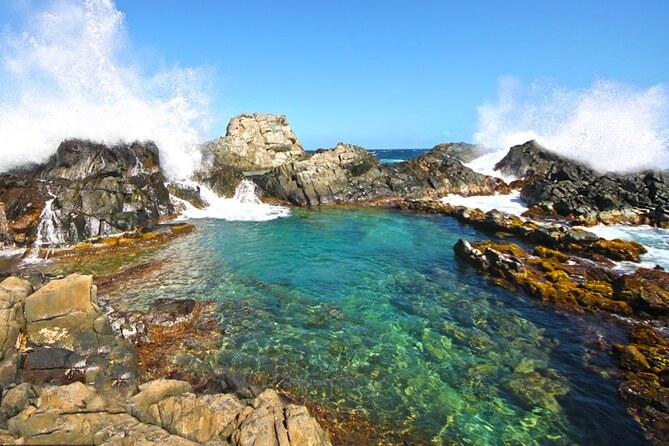
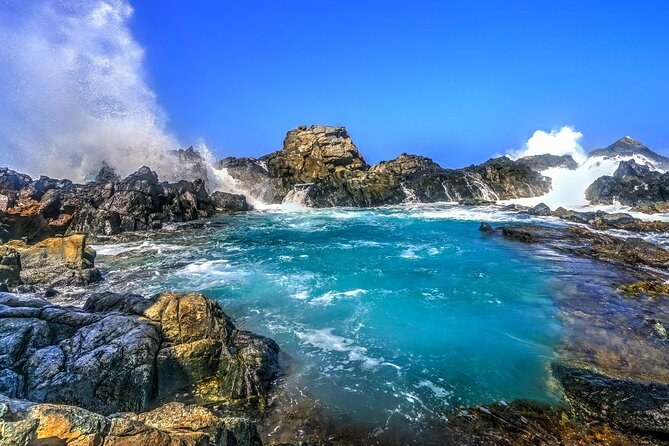
Half Day Hike at Arikok National Park & Snorkel
Park pass includedTransport includedSnorkel gear
From $115 per person