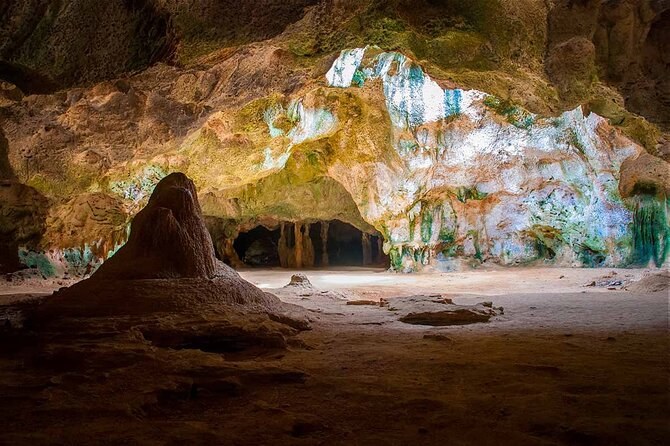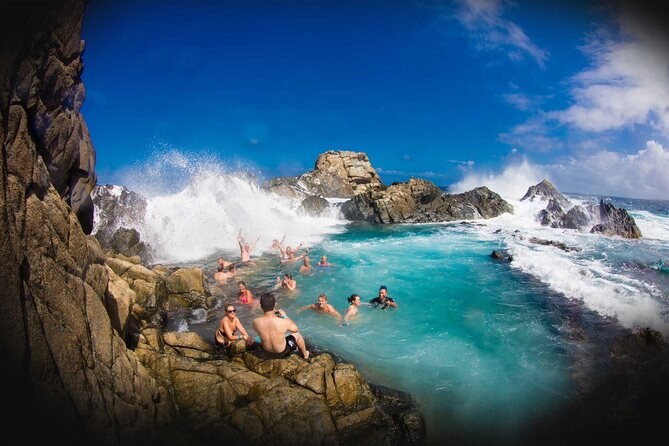
Aruba Natural Pool and Indian Cave Rugged Jeep Safari
Pass paid at check-inTransport includedSnorkel gear
From $99 per person
Aruba has almost no weather in the sense most destinations do. It sits below the hurricane belt in a permanent dry-season climate, the temperature range across a whole year is about three degrees, and the park is open every day. So the usual question — when is the weather good — has a boring answer, and the interesting question is different.
Wind, and almost nothing else. The north-east trade winds run across this island constantly and they run hardest from about December through July. That wind is why Aruba is comfortable at thirty degrees, and it is also what puts swell on the windward coast, which is the coast the park occupies.
Swell on the windward coast is what decides whether you swim at Conchi. The rock rampart that makes the pool works only when the sea is not coming over it, and when the swell is up the guides keep everyone above the rail. That single mechanism is the whole seasonal story here.
September to November, without much argument. The trades fall away through late August, the sea settles, and the odds on getting into the pool are at their best. It is also the quietest stretch in the park, because it sits outside both the northern-hemisphere winter season and the summer holidays.
The trade is rain. October and November are the wettest months, at roughly seventy and ninety millimetres, and even that arrives as short afternoon showers rather than whole days. Nothing closes. The month-by-month page has the detail for each one.
Mid-December to April, which is the high season across the island, and any day with several ships in. Cruise arrivals concentrate at the same three stops from about ten in the morning, so a busy day and a quiet day can be the same date with a different start time.
The fix is the first departure or a genuine afternoon grade, not a different month. The hour-by-hour plan covers where the crowds fall.
Wind and rainfall patterns for Aruba's windward coast. The park is open every day of the year in all three.
| Season | Months | Wind | Rain | Crowds | Best for |
|---|---|---|---|---|---|
| High and dry | December to April | Strong | Very low | Heaviest | Walking, photography, guaranteed sun |
| Hot and windy | May to August | Strong, easing in August | Low | Moderate | Long daylight, clear offshore water |
| Calm and quiet | September to November | Light | Highest | Lightest | The best odds on swimming at Conchi |
No, and this is worth saying plainly because visitors from wetter places assume otherwise. Rain here arrives in bursts and drains fast off limestone; the tracks are passable within the hour. Aruba sits outside the hurricane belt, so the storm risk that shapes travel planning across the rest of the Caribbean does not apply in the same way.
What the weather closes is the swim, not the day. Everything else — both caves, the dunes, the trails, the drive — happens regardless.
For the caves, the months when the sun is highest: roughly March to September, when the daylight shafts through Quadirikiri's roof land hardest on the sand. For the coast, the softer months at either end of the year, when the light is lower and the black rock and turquoise water read better against each other.
Either way the hour matters more than the month. The caves page covers what happens inside them at midday.
Not really, and that is unusual enough to say. February gives you the driest, brightest conditions and the least likely swim; October gives you the best swim and an afternoon shower. July gives you both heat and wind. None of those is a bad day in a park that is mostly about rock, cactus and coast.
If you are choosing dates around one thing, choose around the pool, and if you cannot, book any month with free cancellation and check the forecast the day before.
Less seasonal than you might hope. The cododo lizards are out whenever it is warm, which is always. The shoco — the burrowing owl — is active at dawn and dusk year round, so the hour matters far more than the month. The cascabel is nocturnal in the hot months and rarely seen in any of them.
The reintroduced lora, brought back in 2024, is the newest thing to look for. The wildlife page has where and when.
Constant, and stronger than visitors expect. The north-east trades run across Aruba all year and they are the reason the divi-divi trees grow permanently bent to the south-west. On the windward side, where the park is, that wind is unbroken from the open Atlantic.
Two practical consequences. Sunscreen dries off you and the wind hides how much sun you are taking, so cover up rather than reapply. And an open jeep at speed in a strong trade is genuinely fierce — one traveller could barely keep her eyes open — which is why two operators sell goggles and dust masks at the desk.
Barely, and that is part of its character. There is no green season here in the way there is on the wetter Caribbean islands: the cacti, the divi-divi and the scrub look much the same in February as in October, and the rock and the coast do not change at all. After the November rains there is a brief flush of green in the interior, which is the closest this landscape gets to a season.
What does change is the sea, and the sea is what you are choosing between. The windward bays are dramatic in a big swell and merely pretty in a calm one, so a windy month is not a wasted one — it is a different photograph.
The first departure, or a genuine afternoon grade. The morning gives you cooler walking, calmer water before the wind builds and the caves before the convoys. The afternoon gives you an empty Natural Pool near the end of the park's hours, which one traveller describes as having the place entirely to themselves.
What does not work in any month is the middle of the day: hottest, windiest and busiest at once. Arikok National Park jeep tours publish their departure times, and the earliest is almost always the one to take.
Quadirikiri is the pinch point, because everybody wants the same photograph of the same shaft of light and there is one staircase in and out. On a high-season morning with ships in, there can be three jeeps at the mouth at once. On a September weekday you may have the chamber to yourself.
Fontein spreads people out better, partly because the pond holds them and partly because it is the second stop rather than the first. Either way the answer is the same as it is for the pool: be early, or be genuinely late. The caves page has what to look for once you are inside.
Not on these listings. The fares captured here are the same figures in February as in October, which is unusual and worth knowing — most destinations price their high season upward. What changes with the season is availability rather than price: the morning departures fill further ahead between mid-December and April, so book three to five days out then and a day or two out at other times.
The conservation pass does not move either. It is US$22 per adult year round and free for under-17s, set by the park rather than by anyone selling a tour. The fees page has the rest.
The things-to-do page covers what you will actually be doing once the month is settled.
September to November if the swim at Conchi matters, because the trade winds have eased and the sea is calmest. December to April if walking and reliable sun matter more. The park is open and warm in all twelve.
Rarely. October and November are the wettest months and even they deliver short afternoon showers rather than whole days, and the tracks drain fast. Rain closes nothing here.
Late in the year, when the trades have dropped, and early in the day before the wind builds. The Natural Pool page covers what decides it on any given morning.
No, it sits below it, which is why the storm season that shapes travel across the rest of the Caribbean does not apply here in the same way. The park runs every day of the year.
September, and the first departure of any day. Cruise arrivals concentrate at the same stops from about ten in the morning, so the hour matters as much as the month.
Morning for cooler walking, calmer water and the caves before the convoys. Afternoon for an empty Natural Pool near closing. Both run on several listings and the hour-by-hour plan sets out the difference.
There is no bad month here, only a windier one and a calmer one. Every departure is listed on Arikok National Park Tours.
From $99 per person
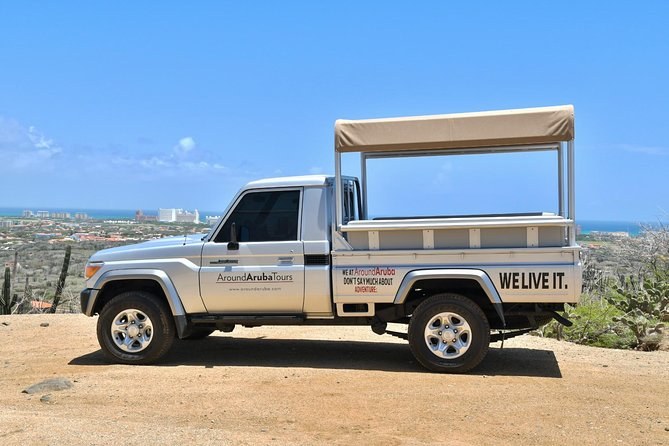
From $121 per person