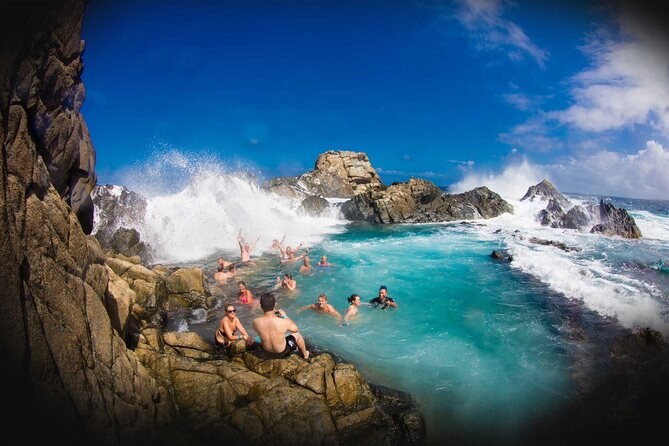
Aruba Natural Pool and Indian Cave Rugged Jeep Safari
Pass paid at check-inTransport includedSnorkel gear
From $99 per person
Aruba's weather barely changes, and that is the point: the island sits below the hurricane belt in a permanent dry-season climate, and every month is warm and sunny. What does change is the wind — and the wind is what decides whether you swim at Conchi.
Three consequences, in the order they will affect you. The trade wind puts swell on the windward coast, and when the swell is running the guides keep everyone above the rail at the Natural Pool. It blows hardest from about December to July. The heat sets your start time. There is no shade anywhere in the park, so a walk after ten in the morning is a different and worse activity than the same walk at eight. Rain barely matters. Even the wettest months deliver short afternoon showers rather than whole days, the tracks drain quickly, and nothing closes.
Temperature is not a variable worth planning around: the difference between the coolest and hottest month is about three degrees. Plan around wind and hour instead.
Dry and windy. Expect 25 to 29 °C and a trade wind running hard enough to put swell on the windward coast most days. Rainfall is low, around 40 mm across the month. Conchi is often too rough to enter, so take a morning departure and treat the swim as a bonus.
The driest month of the year, and the windiest stretch of the dry season. Daytime temperatures sit at 25 to 29 °C with almost no rain. The park is at its most comfortable for walking and its least reliable for swimming.
Still dry, still windy, and the light is at its hardest. Around 25 to 30 °C with rainfall under 20 mm. Midday in Quadirikiri Cave is at its best now, because the sun is high enough to drop straight through the roof.
The wind begins to ease late in the month and the crowds thin as the high season ends. Temperatures run 26 to 31 °C. Rain is still minimal. A good compromise month if you want the dry-season light without the February wind.
The first proper heat, with 27 to 31 °C and a few short showers. The wind drops noticeably from mid-month, which is when the odds on swimming at Conchi start to improve. Trails need an early start from here on.
Hot and mostly dry, 27 to 32 °C. The trade wind is at its most consistent again through June, which makes the open jeep pleasant and the coast rough. Carry more water than you think for any walk.
The hottest stretch of the year alongside August, at 28 to 32 °C, with the wind still strong. Cruise arrivals build through the month, so the caves and Conchi have more people in them by mid-morning. The first departure of the day is worth paying for.
Hot, and the wind starts to relax at the end of the month. 28 to 32 °C, rainfall still low at around 30 mm. Walking is genuinely uncomfortable after 10am, so plan a gate-opening start or leave the trails alone.
The calmest water of the year begins here as the trades fall away, and it is the quietest month in the park. 28 to 32 °C and rising humidity. If swimming at Conchi is the point of your trip, this is the month with the best odds.
Warm, calm and the wettest stretch begins, with around 70 mm spread across short afternoon showers. 27 to 31 °C. Rain does not close the park and the tracks drain fast, but an open jeep in a shower is an open jeep.
The wettest month, around 90 mm, still delivered in short bursts rather than whole days. 27 to 30 °C. The sea is usually calm and the light is softer than any other time of year.
Rain eases, the wind returns and the high season starts in the third week. 26 to 29 °C with around 70 mm. Book departures further ahead from mid-month, because the morning runs fill.
Wind and rainfall patterns for Aruba's windward coast; the park does not close in any of them.
| Season | Months | Wind | Rain | Best for |
|---|---|---|---|---|
| High and dry | December to April | Strong | Very low | Walking, photography, reliable sun — poor odds on the swim |
| Hot and windy | May to August | Strong, easing in August | Low | Long daylight and clear water offshore — start early |
| Calm and quiet | September to November | Light | Highest | The best chance of swimming at Conchi, and the fewest people |
If you are choosing dates around one thing, choose around the pool. September to November gives you the calmest sea of the year and the emptiest park, at the cost of an afternoon shower now and then. Everything else here is good in every month, and every departure on Arikok National Park jeep tours runs year-round.
Take the first departure. The wind builds through the morning, the cruise arrivals reach the caves by ten, and the light in Quadirikiri Cave is best while the sun is climbing. The one argument for the afternoon run is that it finishes at Conchi near closing, when the earlier convoys have gone — a traveller on one of the afternoon departures describes having the pool entirely to themselves.
Either way you are inside the park before the gates stop admitting. The visiting page has the gate hours, and the Natural Pool page covers what the sea decides.
The tour still runs and the guide calls the swim at the rail on the day. The listings themselves describe swimming at Conchi as conditions-permitting, and the caves, the beaches and the drive are unaffected. If the forecast worries you, cancel free of charge the day before and rebook.
No — the sea decides, and the listings say so themselves. Conchi is a rock basin open to the windward Caribbean, and when the swell is up the guides keep everyone above the rail. On a calm morning it is the best half hour of the day.
Half a day if you are driving yourself to the caves and Boca Prins, and four to six hours on a guided jeep that also reaches Conchi. The tours here run from two hours to eight, and the difference is how much of the island beyond the boundary they add. A full day lets you walk a trail as well.
There is no bad month here, only a windier one and a calmer one, and the departures run through all twelve. They are compared side by side on Arikok National Park Tours.
From $99 per person
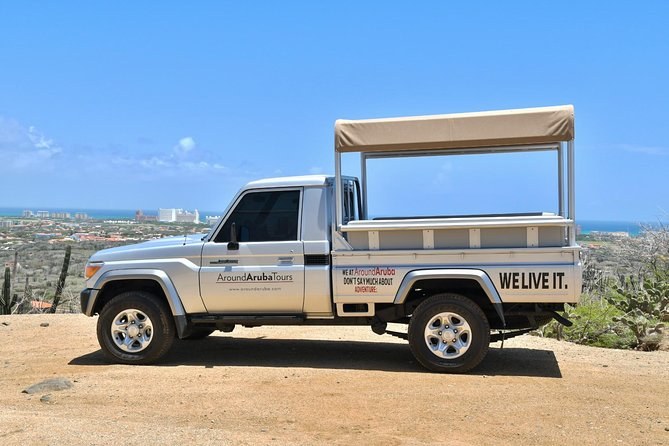
From $121 per person
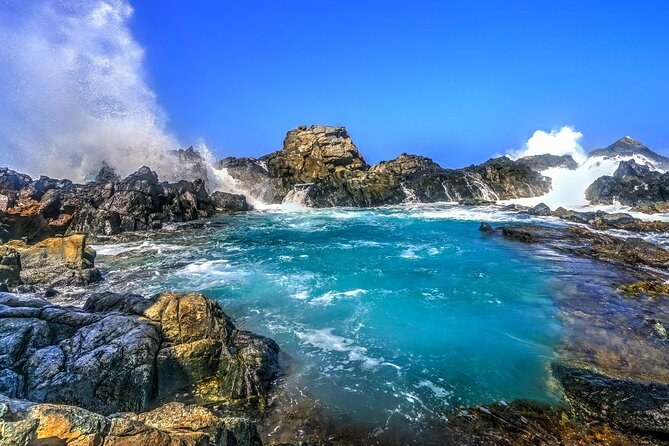
From $115 per person