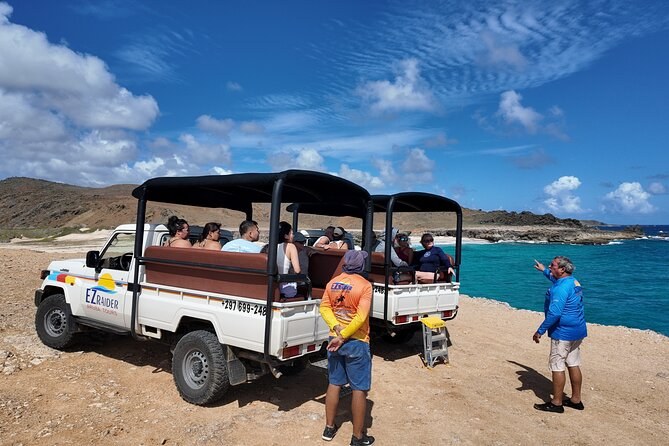
Fontein and Quadirikiri Caves, Arikok National Park
Two limestone caves sit on the same road through the eastern half of Arikok National Park, ten minutes apart, and almost every guided day stops at both. They are not alike: one holds the oldest human record on Aruba, the other is a photographer's room with the roof open to the sky.
Fontein Cave, and the drawings on its roof
Fontein is the historic one. Caquetío people — the Arawak-speaking inhabitants of Aruba before European contact — drew on its ceiling in red-brown pigment, and those drawings are still there, low enough overhead to see without a torch. They are the oldest surviving human mark on the island.
The cave also holds a shallow freshwater pond fed by seepage, which is the second reason it is on every itinerary: small fish live in it and will nibble at feet left in the water. It is an oddity rather than a spa treatment, and it appears in more traveller reviews than the rock art above it. Most departures allow between fifteen and forty-five minutes here.
Quadirikiri Cave, and the light through the ceiling
Quadirikiri — spelled Guadirikiri on some signage — is the larger and the more photographed. Two big chambers open off the entrance, and holes in the roof of the first drop shafts of daylight straight onto the sand floor below. The effect is strongest in the middle of the day when the sun is high enough to come straight down.
A staircase leads up to the mouth. Beyond the lit chambers the passage runs back into darkness, and that is where the bats are. Nothing about the walk requires equipment.
Read from the operators' own itineraries and the park's own descriptions.
| Fontein Cave | Quadirikiri Cave | |
|---|---|---|
| Why go | Caquetío rock drawings on the ceiling | Daylight shafts through the roof onto sand |
| Also there | Freshwater pond with small fish | Two large chambers, bats |
| Getting in | Short walk on a made path | Staircase to the entrance |
| Light | Dim — the drawings are the point | Bright at midday, dark at the back |
| Typical stop | 15 to 45 minutes | 10 to 20 minutes |
| Best photographed | Close up, on the ceiling | From the shadow, looking into the light |
What the rock art actually is
The drawings are Caquetío work, made by the people who lived on Aruba for centuries before the Spanish arrived in 1499. They are pictographs — painted, not carved — and the pigment is an iron-rich earth. What they depict is not settled; descriptions range from figures to abstract marks, and the honest position is that nobody publishes a confident reading of them.
They survive because the cave is dry and the ceiling is out of reach. The park's own rules prohibit touching or collecting anything, and that applies to the walls more than anywhere else in the park.
Bats, and why they are nothing to avoid
Both caves hold small bat colonies and Quadirikiri's is the one visitors notice. They roost in the dark reaches away from the lit chambers, they are asleep during the hours the park is open, and they are harmless. The park asks for quiet inside, which is as much for them as for anyone.
Getting inside: steps, light and footing
Surface: made paths at both, with a staircase at Quadirikiri. Light: natural, no torch needed for the visitor areas. Footing: sand and worn rock, uneven in places. Time needed: half an hour covers both if you are driving yourself. Neither cave is wheelchair accessible, and both are reachable on the graded road from the San Fuego gate in an ordinary car — which makes them the part of the park you can see without booking anything. Planning a self-drive visit covers the rest of that route, and the map page shows where the surface changes.
Frequently asked questions
What is inside Fontein Cave?
Caquetío rock drawings on the roof, which are the oldest human record on the island, and a shallow freshwater pond where small fish nibble at your feet. It is a short walk in on a made path. Most tours allow fifteen to forty-five minutes there.
What is different about Quadirikiri Cave?
Two large chambers with openings in the roof that drop shafts of daylight onto the sand floor, which is why it photographs better than any other spot in the park. A staircase leads to the entrance. Small bats live in the darker chamber and are harmless.
Are there bats in the caves?
Yes, and they are small, harmless and mostly asleep. They roost in the darker reaches away from the lit chambers where visitors walk. The park asks that you keep quiet inside, which is as much for them as for anyone.
Both caves sit on graded road, so this is the part of the park you can do without booking anything — and the part every guided day includes anyway. Compare the departures on Arikok National Park Tours.
Tours that stop at both caves
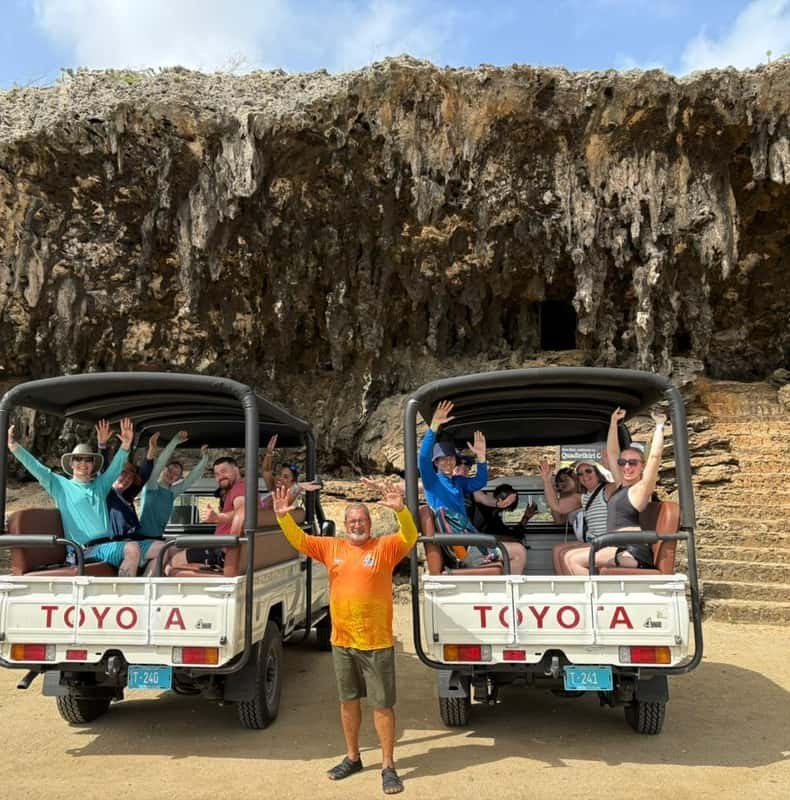
Aruba: Arikok National Park Jeep Safari
Park pass includedSnorkel gearLocal guide
From $109 per person

Aruba Signature Jeep Tour: Natural Pool and Baby Beach
Pass paid at check-inLocal guideMax 12
From $78 per person