
Aruba Signature Jeep Tour: Natural Pool and Baby Beach
Pass paid at check-inLocal guideMax 12
From $78 per person
Three things catch people out at Arikok National Park, and all three are fixable in the five minutes it takes to read this. The gates shut earlier than the internet says. The pass is charged per person and not per car. And the one place everybody has come to see is on the far side of a road your rental agreement excludes.
The Aruba Conservation Foundation, which runs the park, publishes two gates on two timetables: San Fuego from 8:00am to 3:30pm and Vader Piet from 8:30am to 3:00pm, every day. Signage at the entrance has posted a tighter 9:00am to 3:00pm still. Plenty of travel sites round all of that to "8 to 4", which is the version that gets people turned away at the barrier.
Read it as: be through the gate in the morning. That is not a hardship — the morning is cooler for walking, the light in the caves is better and the wind has not built yet — but it does mean the park is a morning plan rather than an afternoon one. The visiting page has the gate table, and the map explains which entrance to use.
Entry is by conservation pass, and the park's own board at the entrance states that a valid one is required by law. The Aruba Conservation Foundation publishes it at US$22 per person for adults. Under-17s enter free. Residents of Aruba, Bonaire and Curaçao pay a reduced rate on production of a government ID.
Published by the Aruba Conservation Foundation. One pass, one day, the whole park — caves, beaches, trails and Conchi.
| Who | What they pay | What it covers |
|---|---|---|
| Adult | US$22 | The whole park for the day |
| Under 17 | Free | The same, with no ticket needed |
| Local resident | Reduced rate | Bring a government-issued ID |
| On a guided tour | Sometimes already paid | Six listings include it; three collect it at check-in |
The complication is not the price, it is who has already paid it. Several departures carry the pass inside the fare and several state it in their exclusions and take cash when you check in, which is the single most common complaint in the traveller reviews. The pass page lists which does which, tour by tour.
Most of the park is easier than people expect. From the San Fuego gate a paved and graded road carries an ordinary hire car to the visitor centre, both caves, the dune field above Boca Prins and the viewpoints in between. That is a genuinely good half day for the price of the pass and some petrol.
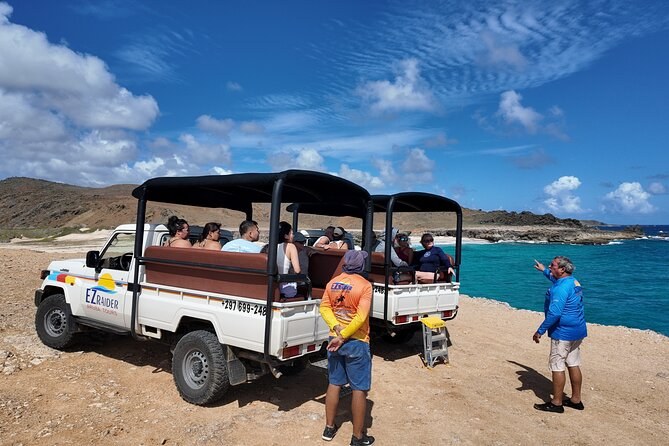
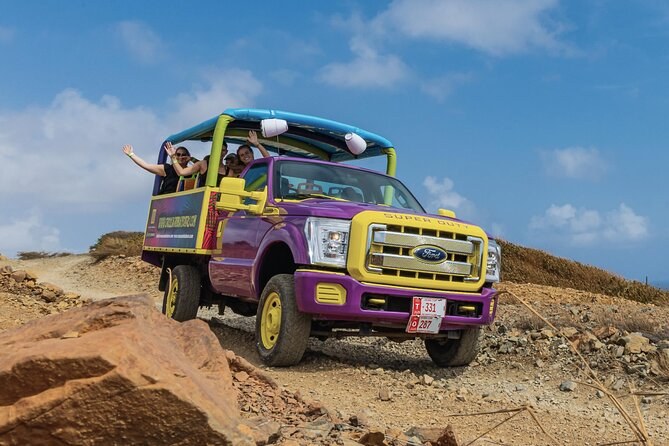
Then the surface changes. The run out to Conchi — the Natural Pool, the rock basin everybody has seen a photograph of — is a rock track that needs real ground clearance. Two things stand between you and driving it yourself: the vehicle, and the fact that Aruban rental agreements routinely exclude unpaved roads from cover, with that road named on many of them. The Natural Pool page sets out the four ways past the junction.
Honestly, it depends on which half of the park you want, and that is the whole decision.
Fares start at seventy-eight dollars for a seat and run past six hundred for a private vehicle, and the difference is rarely more park — it is more island. guided tours of Arikok National Park lays them out side by side.
San Fuego is the main entrance and the one you almost certainly want. The visitor centre is there: passes, maps, the exhibition and the only toilets inside the boundary. It is twenty-five minutes from Oranjestad and about half an hour from the Palm Beach and Eagle Beach hotel strip. Vader Piet, the southern gate, makes sense only if you are already down near San Nicolas.
There is no public bus into the park. A taxi will take you to the San Fuego gate and cannot take you to Conchi, so if you are not driving, a guided departure is the practical answer rather than a luxury.
Half a day driving yourself to the caves and Boca Prins. Four to six hours on a guided jeep that also reaches Conchi. A full day if you want to add one of the walking routes or finish at Baby Beach outside the boundary. The tours band themselves from two hours to eight, and the things-to-do page puts both shapes in order.
Every month here is warm and sunny, so the variable is wind rather than weather. The trade winds run hardest from about December to July and they are what puts swell on the windward coast, which is what closes the swim at Conchi. September to November is the calmest water and the quietest park, at the cost of the odd afternoon shower. The month-by-month page has the detail.
They treat the swim as guaranteed. It is not: the guides call it at the rail on the day and the listings themselves hedge it. Everything else about the day is unaffected, and every tour here refunds in full up to 24 hours ahead, so a poor forecast is a reason to rebook rather than to worry. Book the morning departure, carry cash, and take the shoes.
Get the gate and the pass right and the rest of the day looks after itself. Every departure is on Arikok National Park Tours.
From $78 per person
From $95 per person